Showing posts with label seafood. Show all posts

Wednesday, November 2, 2016

You'll have to decide if a new Whole Foods in Closter is worth the detour

A meatless Korean BBQ Veggie Bowl ($8 or $12 with a wedge of tofu) is among the prepared-food options at the new Whole Foods Market in Closter, a wealthy Bergen County community about 10 miles northeast of Hackensack.


By VICTOR E. SASSON
EDITOR

A visit to the new Whole Foods Market in Closter immediately makes clear why shoppers are willing to pay more for groceries and prepared food.

The supermarket in the Closter Plaza shopping center offers the best from local farms and fisheries, but nothing from the factory farms that raise mystery meat and poultry, putting profits above the welfare of both animals and humans.

Products that line the shelves are organic or grown naturally without genetically modified seeds and pesticides.

Whole Foods also is the only supermarket chain in northern New Jersey to give you a credit (10 cents) for using a reusable bag.

I've been shopping at the bigger Whole Foods Market in Paramus since it opened in 2009, but visit a Korean-owned barber shop, manicurist or restaurants in Closter about once a month.

After a haircut on Tuesday, I met a friend for lunch at the new Whole Foods, had a cup of coffee and looked around.

It's different enough from the Paramus store that I'll probably drop in whenever I'm in town.

See: No one has to spend a whole paycheck


The organic supermarket, which opened last week, isn't as big as the Whole Foods in Paramus, a couple of miles from my home, and doesn't sell wine or have a sushi stand. But the new market has a few exclusive features, including a sheltered outdoor seating area for customers with a big ceiling fan and a fire pit, below.

Once you leave the store, there is no re-entry, above and below.

The exit gate is next to the fire pit.

More outdoor seating and near the entrance, firewood for sale.

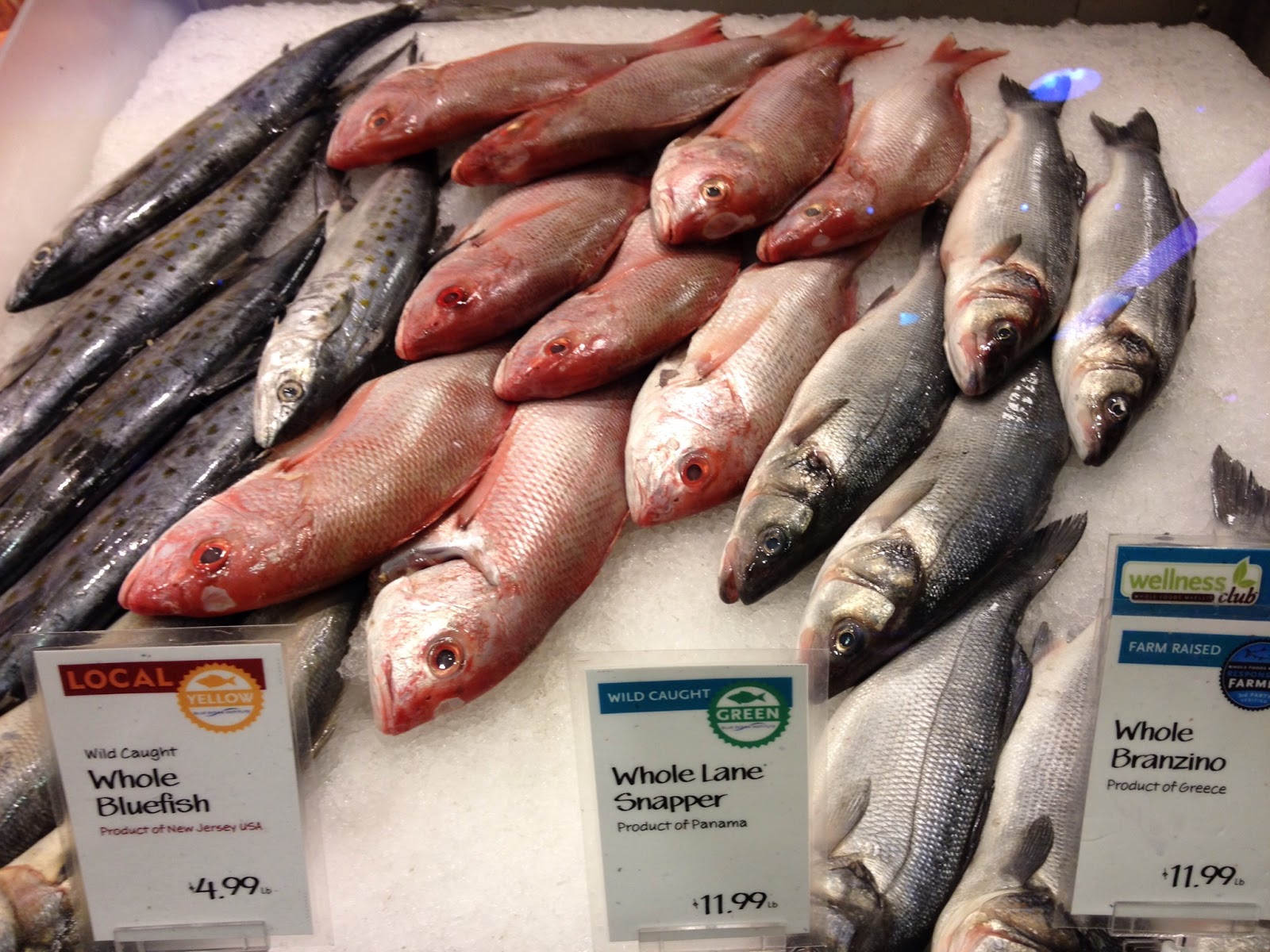
The seafood counter is about half the size of the one in Paramus, but Whole Foods assures customers that even the farmed seafood it sells is raised without antibiotics and preservatives.

The whole wild-caught Porgies nestled in ice, right, are a great deal at $4.99 a pound.

Wild and farmed oysters were $1.75 each.

Dry-aged beef is raised naturally without antibiotics and growth hormones, as is all the poultry and meat sold at Whole Foods.

In Paramus, you get a break if you buy two antibiotic-free rotisserie chickens, but I didn't see any such deal in Closter.

I counted three islands of help-yourself hot or cold prepared food at $8.99 a pound. You could easily spend $20 to fill the box in the foreground.

Food stands offer wood-fired pizza from a special oven, made-to-order sandwiches and Veggie Bowls (misspelled "Vegie" on signs), which are available with extra-cost protein, including salmon and chicken. My spicy lunch bowl included Korean BBQ cauliflower, kimchi and carrots, plus sriracha sunflower seeds, cilantro and Korean BBQ aioli over kelp noodles and kale, all topped with a wedge of tofu.

A slice of pizza with Brussle sprouts and Bacon was $3.50. A Classic Deli sandwich with natural, preservative-free pastrami and corned beef on marble rye, served with a Guss' pickle, set my friend back $10.
The Closter store offers freshly milled Tahini ($12 a jar), and Halva, a Middle Eastern confection usually made with sesame flour and honey. I tried a sample of the Rose Oil Halva, which was delicious and not too sweet.

Whole Foods' 365 Everyday Value line includes a variety of Mexican-style salsas -- all of which are non-GMO and free of added sugar -- including Roasted Verde (16 ounces for $2.69). That night, I used most of a bottle I had at home to poach Icelandic cod fillets from Costco Wholesale in Teterboro ($7.99 a pound), below.


The 365 Everyday Value line includes non-GMO Garbanzo Beans, Black-Eyed Peas and others for 79 cents a can, and Organic Whole Wheat Pasta imported from Italy for $1.49 a pound.

You pay for sandwiches and other prepared food at the checkout counter amid inspirational signs that remind you why you shop there, such as, "We sell the highest quality natural and organic products available."

Tables and chairs for eating your food purchases have stations for utensils and napkins at either end, but none in the middle. A couple of couches also are available near the restrooms, and I saw a woman relaxing on one as she appeared to be nursing a baby, though the child was covered by a cloth.

Details

Whole Foods Market, 33 Vervalen St., Closter (in Closter Plaza shopping center); 1-201-367-9099. Open 7 days from 8 a.m. to 10 p.m.

Website: Healthy Food

Tuesday, September 2, 2014

If meals could speak, mine would tell tales of the sea

A breakfast of leftover organic whole-wheat linguine with bottled marinara and added sardines, anchovies, red wine and seasoning, served with two small wedges of pesto-and-cheese frittata. Most of the ingredients come from Costco Wholesale in Hackensack.


By VICTOR E. SASSON
EDITOR

Life, cooking and food shopping are so much easier when you don't eat meat and poultry.

You never have to worry about whether the food you are eating was raised with antibiotics and hormones that are harmful to humans or what the animal was fed before it was slaughtered.


You never have to imagine the horrors of the slaughterhouse or wonder if that steak came from a sick animal that collapsed, only to be dragged to its death.

None of those issues arise with wild-caught seafood.

Fresh fish is cheap, and you can avoid ingesting a lot of mercury by sticking to the smaller species, including anchovies, sardines, whiting and so forth.


Canned-fish salad includes yellow-fin tuna, pink salmon and Moroccan sardines with chopped celery and sweet peppers. The dressing is Dijon mustard, fresh lime juice and ground cumin, all to taste. Costco carries the mustard, limes and all three canned fish.

Cholesterol drops

I stopped eating meat and poultry more than four years ago, and my cholesterol has dropped to where I plan to ask my doctor if I can discontinue the statin I have been taking for decades.

The other members of my family still eat meat and poultry, meaning we often have to prepare two dinners.

I try to steer them to organic or grass-fed beef and antibiotic-free chicken and lamb at Whole Foods Market, Costco Wholesale and ShopRite.

Kimchi from Costco

I do eat organic chicken stock from Costco Wholesale, using it instead of water when I prepare brown rice and lentils in an electric cooker.

This morning, my wife called from Costco to ask if I wanted a large jar of kimchi for $7.99, but when she read the ingredients I noticed it included beef-bone extract.

I told her not to buy it.

Our favorite kimchi comes from the Oh family, which closed their Englewood business, but haven't re-opened yet in Ridgefield.

We always had a jar of their Arirang Kimchi in the refrigerator, but now, we only eat the spicy, fermented cabbage and other types of kimchi when we go out to a Korean restaurant.


Escoveitch of fish.

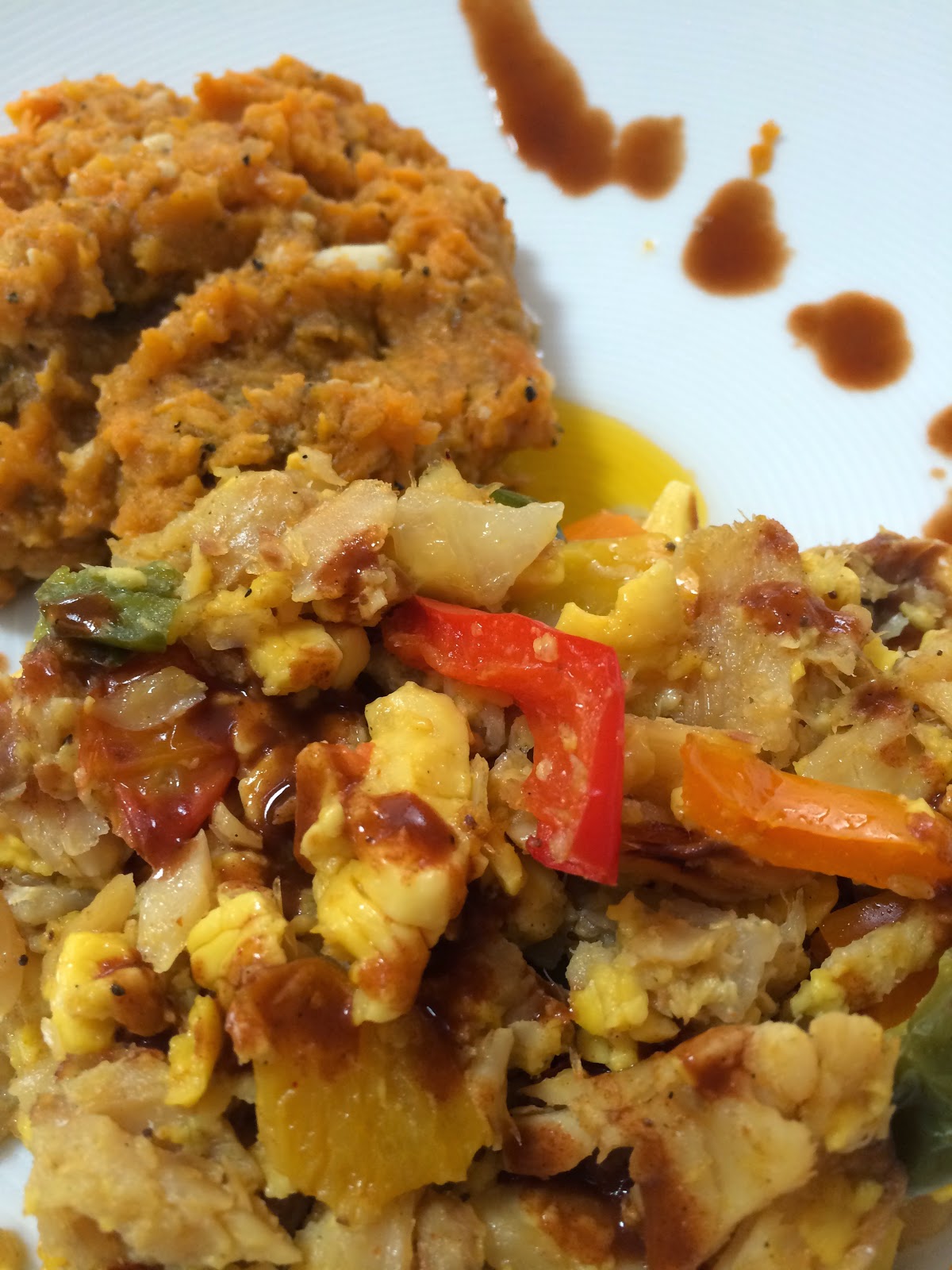
Ackee and salt fish, the Jamaican national dish, accented with Valentina Mexican Hot Sauce and served with garlic mashed sweet potatoes. My wife used salted Alaskan pollock from Costco instead of the Canadian dried cod the Hackensack warehouse store no longer carries.


Saturday, August 2, 2014

NYC Restaurant Week: A seafood favorite doesn't disappoint

Amalfi-style Fish Soup with Tomato and Chili Bruschetta at Esca in Manhattan.


By VICTOR E. SASSON
EDITOR

It's the little extras that make lunch such a pleasure at Esca, a southern Italian trattoria in Manhattan that celebrates fresh seafood.

That's especially true during NYC Restaurant Week, when the restaurant offers deeply discounted three-course lunches and dinners ($25 and $38, respectively).

On Friday, my lunch began with a gift from the chef -- a white-bean crostini bursting with the flavor of preserved mackerel.

Other nice touches were complimentary olives with a thin, hot pepper and a small bowl for the pits; the crusty heel of a large Italian bread with fruity extra-virgin olive oil, and both lemon and lime for the whole fish I ordered.

For my first course from the bilingual menu, I chose the Amalfi-style Fish Soup with Tomato and Chili Bruschetta.

The filling, mildly spicy broth held several pieces of perfectly poached fish.

My entree was Spigola Nera, whole roasted local black sea bass with salty caperberries and olives.

Except for the scorched head, the fish was perfectly cooked and delicious right down to the crispy tail.


One quibble was the scorched head of the Whole Roasted Local Sea Bass, denying me the tender, juicy "cheek" under the eye. But the other side of the head wasn't overcooked and yielded the juicy morsels. A smaller plate for the bones was provided.
This crositini -- a gift from the chef -- was packed with the flavor of preserved mackerel.

Changing menu

My Friday lunch at Esca came during the second week of the semi-annual Restaurant Week promotion, which ends on Aug. 15.

About 300 restaurants in Manhattan, Brooklyn and Queens are taking part this summer.

At Esca, skate wing and whole porgy with salsa verde were offered, but neither was available on Friday.

My waiter explained the Restaurant Week menu changes slightly on an almost daily basis.

Still, the black sea bass was perfect for me, a lover of whole fish who delights in extracting every sweet morsel of flesh. 


Complimentary olives.
If you order the whole fish, you don't have to ask for lemon.
Part of the well-done heel of a large Italian bread -- soaking in extra-virgin olive oil -- an indulgence on my no-bread, no pizza diet.
New this summer, outdoor seating at Esca (Italian for "bait") means you'll have better chance of getting a table without a reservation.
Esca's Restaurant Week lunch menu on Friday.

Dessert to go

The waiter wasn't sure if I could substitute sorbet for the one dessert offered on Friday, Pistachio and Olive Oil Cake, so I asked for it to go and brought it home for my wife to enjoy.

I may try a forkful with its accents of watermelon, lime curd and aged balsamic vinegar.

I paid for my meal with an American Express credit card I registered, and will be getting a $5 statement credit.

That will bring the cost of this wonderful lunch to $27.22, with tax ($2.22) and a 20% tip ($5). That's a great deal at this white-tablecloth emporium of pristine seafood.


Take-out Pistachio and Olive Oil Cake.

Esca comes through

I've been enjoying Restaurant Week lunches summer and winter at Esca for years, and prize it even more now that I eat only seafood.

I've had only one disappointing meal there -- in 2011 -- when I was served a whole John Dory by a waiter who didn't warn me the fish was all bones, leaving me hungry and cursing under my breath as I searched in vain for flesh to eat.

See: An ugly fish shows up at lunch

Esca, 402 W. 43rd St. (Ninth Avenue), New York, N.Y.; 1-212-564-7272. The restaurant is two blocks from the Port Authority Bus Terminal.


Saturday, October 27, 2012

Weight-losing strategies that work for me

Mashed sweet potatoes stand in for fattening white potatoes at any meal.


Sweet potatoes instead of white potatoes. 

Brown rice, not white rice. 

No bread or toast at breakfast, but a bed of whole-wheat pasta for your eggs or egg-white omelet is perfectly fine and filling.

These are some of the strategies I've used to lose weight and keep it off since I gave up bread and pizza at the suggestion of a trainer at my old gym.

From a high of 228 pounds, I've reached a comfortable weight of under 185 pounds.


Organic eggs with manchego cheese and pesto over whole-wheat pasta.


It should go without saying that I don't eat dessert, unless it's ripe fruit with a great of piece cheese or an occasional sorbet.  

I've also stopped eating meat, meaning I can afford to eat a variety of full-fat, reduced-fat and skim-milk cheeses, and whole eggs. 

My overall cholesterol is about 140.

Seafood is a delight -- from Maine lobster to whole wild-caught fish to fillets flown here from Canada, Iceland and other countries.

I eat a lot of organic salad mix, tomatoes and cucumbers. I make canned fish salad with tuna, salmon and sardines, and eat it over salad, not in a sandwich. 


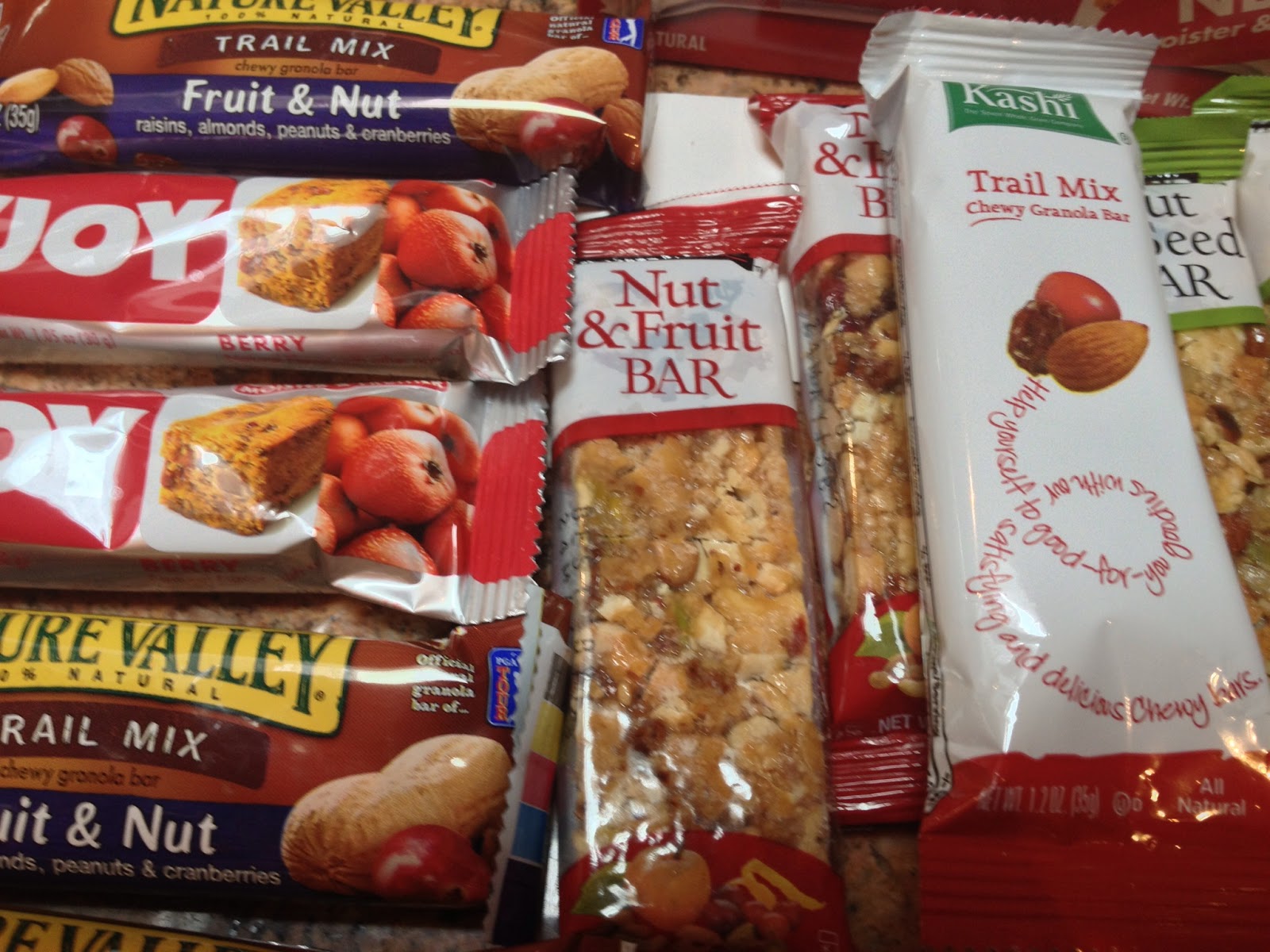
Kashi Trail Mix and and other bars allow me to skip lunch.
 

In the past, a snack would be cheese, smoked wild salmon, canned fish salad and other items, but I'd always eat them tucked inside Syrian pocket bread.

Now, I roll up slices of cheese and smoked salmon, dip them in mustard and eat them out of hand.

A spoonful of peanut or sodium-free almond butter is terrific followed by a spoonful of fig marmalade.

Fig marmalade goes beautifully with slices of manchego, a sheep's milk cheese from Spain. 

The almond butter is great over apple slices.
 

A spoonful of fig marmalade goes well with cheese.


Enhanced by Zemanta

Saturday, September 1, 2012

Honesty is always on sale at Whole Foods

Whole Foods Market names the New Jersey fishing port, the day boat and the captain who landed these sea scallops. "Dry" means no preservatives were added.


As someone who prefers fish over fowl, I always look over the seafood counter when I visit Whole Foods Market in Paramus.

Whole Foods doesn't sell live lobster, but remains tops when it comes to fresh seafood -- delivered seven days a week, much of it from its own processing facility.

This past Thursday, I got a kick out of the sign with local day-boat sea scallops -- naming the port, boat and even the captain.

These were big, U-10 scallops -- about 10 to the pound -- and were priced at $24.99 a pound. 


If you eat pork, what more do you need to know?


Opposite the butcher counter, the store advertised its naturally raised bacon with a sign painted on the floor in front of a refrigerated case.

This is the kind of honesty we should find at every food store and restaurant, but sadly Whole Foods is nearly alone in telling consumers where produce, meat and seafood come from and how they were raised, grown or caught.

We have to rely on the store or restaurant for this kind of information, because outside of Consumer  Reports magazine, few newspapers or other publications bother to report on the origin of the food we buy.

The so-called consumer columnist at my local daily newspaper doesn't even acknowledge the existence of organic food.


Pistachio-coated Sea Scallops at Palm Restaurant in Manhattan.

On Thursday, Whole Foods had organic California red grapes on sale for $2.29 a pound -- a discount of more than 30%. I bought 2.65 pounds.

I also picked up naturally raised beef liver for my wife, son and mother-in-law from the butcher counter's frozen meat case, priced at $3.99 a pound.

My daily grind

My first stop on Thursday was Fairway Market, also in Paramus, to replenish my stock of freshly ground coffee.

The Brazil Dark Roast was the only one on sale, for $6.99 a pound, so I asked for 2 pounds Turkish 
grind.


The selection of freshly roasted beans at Fairway Market in Paramus.


I also took advantage of a sale on those wonderful Campari hothouse tomatoes -- three 1-pound packages for $5 (not $3, as I wrote originally).

I love extra-virgin olive oil, but won't pay the $17 or $18 a liter for some of the better ones at Fairway.

Luckily, the store allows shoppers to sample the oils by soaking small pieces of baguette in them.

My guilty pleasure was taking four heels -- the ends of the bread -- and soaking them in expensive bright-  and dark-green olive oils. Delish.


Trader Joe's Organic Whole Wheat Pasta for breakfast.


Whole-wheat pasta

I've been eating whole-wheat pasta for breakfast, lunch and dinner since I gave up virtually all bread and pizza to lose weight.

The pasta, along with brown rice, gives me the same full, satisfied feeling I got from bread, but my body processes it better and I am still able to lose weight gradually.

Now, Consumer Reports magazine has given its "Very Good" rating and recommended organic whole-wheat spaghetti from Trader Joe's and Whole Foods Market.

The magazine's October 2012 issue, which I just got in the mail, calls both "sweet, nutty, whole-grain flavor, chewy texture much like regular pasta."

I've been buying Trader Joe's Organic Whole Wheat Spaghetti, Fusilli and Penne for more than a year. A 16-ounce package is $1.39.

Whole Foods sells organic whole-wheat spaghetti under the 365 Everyday Value brand, but it cost more than Trader Joe's version.


Thursday, May 3, 2012

How to survive without bread and pizza

This package of Syrian bread has been in my freezer since the second half of 2010.
I find whole-wheat pasta to be a great substitute for bread with my morning eggs.
With beautiful wild and farmed fish like this, who needs meat or poultry?
For lunch, Dr. Praeger's California Veggie Burgers with kimchi and red-pepper paste.
A two-cheese, egg-white omelet with brown rice is the closest I get to eating pizza.


I've struggled with my weight since I was a rotund 13-year-old, but only found the key to taking off the pounds in 2010, when I started going to the gym five days a week.

Between May 2008 and the end of 2009, my weight increased to 228 from 205, bringing a warning from my doctor to "love food less."

After I stopped eating meat and poultry in February 2010, I was able to shave off 3 pounds. I  weighed 225 and had a 42-inch waist.

Then, at the gym, I started training with Nick Manzo (his last name is the Italian word for beef). 

Goodbye to bread


We talked about my diet, and all the bread I ate, as well as having pizza every couple of weeks. He suggested cutting out those two favorite foods.

The pounds started coming off, and in about a year, I was down to 200. 

In September 2011, I had open-heart surgery to replace a valve, and after the operation, lost another 10 pounds.

Gym aided recovery

The year I spent at the gym before the operation, plus my weight loss, allowed me to leave the hospital in 4 days, instead of the usual 6 or 7.

I've continued to lose weight, though much more slowly, and now weigh about 187. My old pants, with 38-inch waists, fit me loosely.

Do I miss bread and pizza? Of course.  

Bread lover

I always had Syrian pocket bread in my freezer, and I'd make small snack sandwiches of sliced cheese and smoked salmon.

Now, I eat them out of hand.

I ate Fattal's pocket bread with hummus or dipped it into extra-virgin olive oil. I even stuffed salad and hummus into Syrian bread. 

For many years, before I switched to sliced bread, I ate one of those enormous New Jersey pumpernickel-rye bagels for breakfast every day, usually with homemade yogurt cheese.

I also bought bread nearly every week at Balthazar Bakery in Englewood, favoring its crusty baguette for sandwiches and its dinner rolls, and I'd eat bread with all of my meals.

So, I've come up with a few strategies to make the no-bread diet more palatable.

Between the bread


Before my diet, I had a sandwich for breakfast every day. 

For example, I'd layer smoked salmon, cheese, tomato and organic spring mix between toasted slices of 100% whole-grain bread, which would be spread with pesto, and eat kimchi on the side.

Now, I deconstruct the sandwich, eliminating the bread and adding a lot more spring mix as the foundation for the meal. 

Leftovers for breakfast


I blur the boundary between meals, eating leftover whole-wheat pasta, brown rice and sweet potatoes for breakfast with eggs or omelets -- as bread substitutes.

I find my body processes whole-grain products better than conventional rice and pasta, and baked sweet potatoes are far better for me than white potatoes.

No dessert


When I was younger, I might have had a slice of sweet potato pie or rice pudding now and then, but I eliminated all sweets from my diet many years ago, and avoid butter  and heavy cream like the plague.

The perfect end to a meal is the pairing of fruit and cheese, such as a Grana Padano from Italy. 

Spanish fig-and-nut cake, figs or dates also end a meal on a sweet note. 

Perfect snacks are raw, unsalted almonds or walnut halves I roast at home. 


Other kinds of fat


To fill in for the fat in meat and poultry, I've added whole- and reduced fat cheeses to my diet, along with the part-skim-milk cheeses I always ate.

And I use heart-healthy extra-virgin olive oil liberally -- whether cooking eggs, dressing salads or drizzling on plated whole-wheat pasta. 


A dinner of wild sockeye salmon (frozen) with a baked sweet potato.

A breakfast cheese omelet with sweet potato.

I try to eat only two meals a day -- breakfast and dinner -- and carry nut-and-fruit, and Soyjoy bars to still hunger pangs.

If I meet a friend for lunch, I'll usually have a bowl of soup and a cup of black coffee, as I did today at the Coach House Restaurant in Hackensack.

I eat lots of healthy wild-caught seafood, whole fish and fillets with heart-healthy Omega-3 fatty acids, and don't miss meat or poultry, especially because it is such a challenge to find naturally raised products.


A perfect meal: Sea bass, brown rice, salad and a glass of wine.


I drink only water, seltzer, coffee, tea or wine with meals. I eat a salad or steamed vegetables every day, and some days, I have both.

A salad a day keeps the doctor away.
Whole sea bass with sweet peppers, onions and inexpensive sake.

Kimbap is a Korean roll with white rice, vegetables, imitation crab and egg.